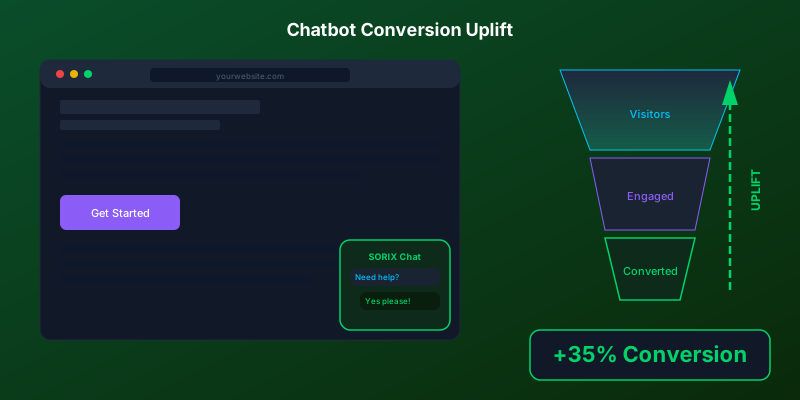
AI chatbots increase website conversions by 35-45%. Here is exactly how they do it, with data from real implementations.
The Conversion Problem
The average website conversion rate is 2.35%. That means 97-98% of visitors leave without taking action. They have questions, doubts, or confusion that your static pages cannot address. An AI chatbot acts as a 24/7 sales assistant that engages visitors at the right moment.
How Chatbots Drive Conversions
1. Reducing Friction
Visitors often leave because they cannot find information quickly. A chatbot eliminates this by providing instant answers:
- “Do you offer monthly pricing?”
- “Can I cancel anytime?”
- “Does this work with my current system?”
- “What is included in the basic plan?”
Each answered question removes a barrier to conversion.
2. Proactive Engagement
Smart chatbots do not wait for visitors to ask. They engage based on behavior:
- Pricing page dwell: “Have questions about which plan fits your needs?”
- Exit intent: “Before you go, can I help with anything?”
- Multiple page visits: “I see you are exploring our services. Want a personalized recommendation?”
- Cart hesitation: “Need help choosing a size or color?“
3. Personalized Guidance
AI remembers past visits and personalizes the conversation:
- Returning visitor: “Welcome back! Last time you were looking at [product]. Still interested?”
- Referred visitor: “Coming from [source]? Here is what most people from there look for.”
- High-intent visitor: “Based on your browsing, I think [service] would be perfect. Want to see a demo?“
4. Capturing Leads Naturally
Instead of cold “enter your email” popups, chatbots capture information through conversation:
“I can send you a detailed comparison, what is the best email to reach you?”
This approach converts at 3-5x the rate of traditional forms.
Conversion Data
| Page Type | Without Chatbot | With Chatbot | Improvement |
|---|---|---|---|
| Homepage | 1.8% | 3.1% | +72% |
| Pricing | 4.2% | 6.8% | +62% |
| Product | 2.5% | 4.1% | +64% |
| Landing page | 5.1% | 8.3% | +63% |
What “Conversion” Means by Business Type
- Service businesses: Lead form submission or meeting booked
- E-commerce: Add to cart or purchase
- SaaS: Free trial signup or demo request
- Local businesses: Call, direction request, or appointment
Best Practices for Conversion-Focused Chatbots
Timing matters: Do not popup immediately. Wait 10-30 seconds or until the visitor shows engagement.
Be helpful, not pushy: Ask how you can help before trying to capture information.
Match the page context: A chatbot on your pricing page should talk about pricing, not your company history.
Keep it short: 3-4 exchanges to qualify and convert. Do not create 20-question surveys.
Clear CTAs: Every conversation should end with a clear next step (book a call, start trial, add to cart).
Measuring Success
Track these metrics after implementing your chatbot:
- Engagement rate (% of visitors who interact)
- Conversation completion rate
- Lead capture rate
- Time to conversion (faster with chatbot?)
- Revenue per chatbot interaction
Add a conversion-focused chatbot to your website and start turning more visitors into customers today.
Writer at SORIX, the AI Automation Studio in Brussels. Building chatbots, voice agents, and automations for businesses across Europe and beyond.