Transform your business data into actionable insights with AI. From dashboards to predictive analytics, here is how to start.
You Have More Data Than You Think
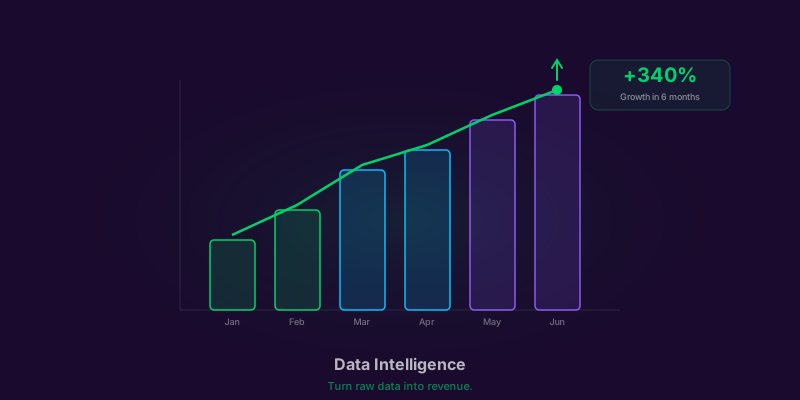
Every business generates valuable data daily: customer interactions, sales transactions, website behavior, support tickets, social media engagement. Most of this data sits unused in spreadsheets, CRMs, and databases. AI turns this raw information into decisions that drive growth.
What Is Data Intelligence?
Data intelligence combines:
- Data collection: Gathering information from all your sources
- Data processing: Cleaning, structuring, and connecting datasets
- Analysis: Identifying patterns, trends, and anomalies
- Insights: Translating patterns into actionable recommendations
- Automation: Acting on insights without manual intervention
Practical Use Cases
Customer Behavior Analysis
AI analyzes your customer data to reveal:
- Which customer segments are most profitable
- What triggers purchases (and what prevents them)
- When customers are likely to churn
- Which marketing channels deliver the best ROI
Sales Forecasting
Based on historical data, AI predicts:
- Revenue for the next 30, 60, 90 days
- Which deals in your pipeline will close
- Seasonal patterns and trends
- Resource needs based on demand forecasts
Operational Efficiency
AI identifies bottlenecks:
- Where processes slow down or break
- Which tasks consume the most human time
- Where errors happen most frequently
- Capacity utilization patterns
Market Intelligence
AI monitors external data:
- Competitor pricing changes
- Industry trends and shifts
- Customer sentiment on social media
- New market opportunities
From Dashboard to Decision
The typical data intelligence pipeline:
- Connect sources: CRM, accounting, website analytics, social media
- Clean and structure: Remove duplicates, standardize formats
- Analyze: AI finds patterns humans would miss
- Visualize: Clear dashboards showing what matters
- Alert: Automated notifications when metrics change significantly
- Act: Trigger workflows based on data thresholds
Real Business Impact
| Application | Typical Result |
|---|---|
| Customer churn prediction | 25% reduction in churn |
| Price optimization | 8-15% revenue increase |
| Inventory forecasting | 30% reduction in overstock |
| Marketing attribution | 20% improvement in ad spend efficiency |
| Sales forecasting | 85% accuracy (vs 60% gut-feel) |
Getting Started (Practical Steps)
Step 1: Identify your biggest question. What decision would be easier if you had better data? Start there.
Step 2: Audit your data sources. What data do you already have? What format is it in? How accessible is it?
Step 3: Start small. Build one dashboard or one prediction model. Prove value before expanding.
Step 4: Automate actions. Once you trust the insights, automate the response (alert sales when a deal is at risk, adjust ads when ROAS drops).
Common Mistakes
- Collecting data without a clear question to answer
- Building complex dashboards nobody checks
- Not cleaning data before analyzing (bad data = bad insights)
- Ignoring the “so what?” of every insight
- Waiting for “perfect data” instead of starting with what you have
Unlock insights from your business data with AI-powered data intelligence tailored to your specific goals.
Writer at SORIX, the AI Automation Studio in Brussels. Building chatbots, voice agents, and automations for businesses across Europe and beyond.