Step-by-step guide to building a RAG (Retrieval Augmented Generation) knowledge base that makes your AI chatbot accurate.
What Is RAG?
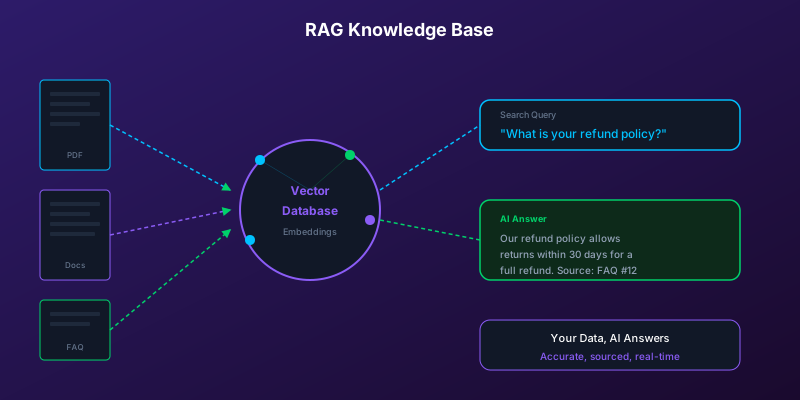
RAG (Retrieval Augmented Generation) is a technique that makes AI chatbots accurate by grounding their responses in your actual business data. Instead of relying on general knowledge, the AI searches your documents, FAQs, and product info before answering.
Why RAG Matters
Without RAG, AI chatbots “hallucinate,” meaning they make up plausible-sounding but incorrect answers. With RAG, accuracy jumps from 60-70% to 92-97% because every response is backed by your real data.
How RAG Works (Simplified)
- Ingest: Your documents (PDFs, web pages, FAQs, emails) are split into chunks
- Embed: Each chunk is converted into a numerical representation (vector)
- Store: Vectors are stored in a vector database for fast retrieval
- Query: When a user asks a question, it is converted to a vector too
- Retrieve: The most relevant chunks are pulled from the database
- Generate: AI writes an answer using those chunks as context
What Data to Include
High-priority sources:
- Product/service descriptions and pricing
- FAQ documents
- Support ticket history (anonymized)
- Company policies and procedures
- Blog posts and guides
Secondary sources:
- Email templates and common responses
- Training materials
- Meeting notes and process documentation
- Customer reviews and testimonials
Building Your Knowledge Base (Step by Step)
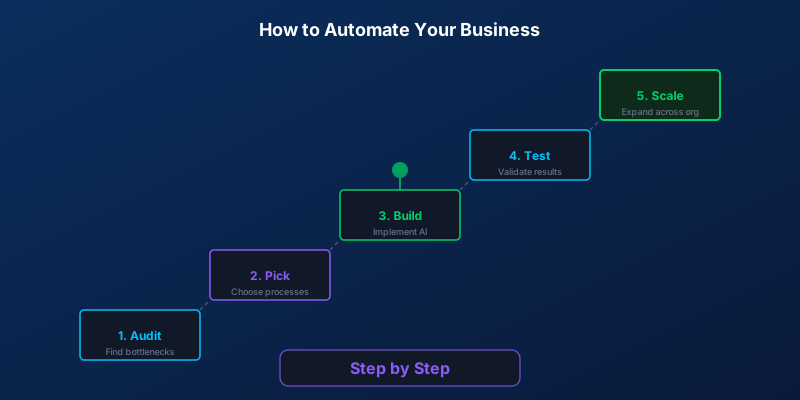
Step 1: Audit Your Content
Gather all documents that contain information customers ask about. Typical businesses have 50-500 pages of relevant content.
Step 2: Clean and Structure
- Remove outdated information
- Standardize formatting
- Fill gaps (if customers ask about X but you have no documentation, create it)
Step 3: Choose Your Tech Stack
- Vector database: Pinecone, Weaviate, or Qdrant
- Embedding model: OpenAI Ada, Cohere, or open-source alternatives
- LLM: GPT-4, Claude, or Mistral for generation
- Orchestration: LangChain, LlamaIndex, or custom
Step 4: Chunk Strategically
Not all chunking strategies are equal:
- By topic: Best for diverse content
- By paragraph: Good for well-structured documents
- Overlapping windows: Prevents losing context at boundaries
Step 5: Test and Iterate
- Test with 50-100 real customer questions
- Identify gaps where the AI cannot find relevant info
- Add missing content and re-embed
- Fine-tune retrieval parameters
Maintenance
A knowledge base is not “set and forget.” Plan for:
- Monthly content reviews and updates
- Adding new products/services as they launch
- Monitoring unanswered questions for gap identification
- Periodic re-embedding when content changes significantly
Common Pitfalls
- Too little data: The AI cannot answer what it does not have
- Outdated data: Worse than no data, because it gives wrong answers confidently
- Poor chunking: Splitting documents in the wrong places loses important context
- No testing: Launching without thorough QA leads to embarrassing mistakes
Let us build your RAG knowledge base so your AI chatbot gives accurate, helpful answers every time.
Writer at SORIX, the AI Automation Studio in Brussels. Building chatbots, voice agents, and automations for businesses across Europe and beyond.